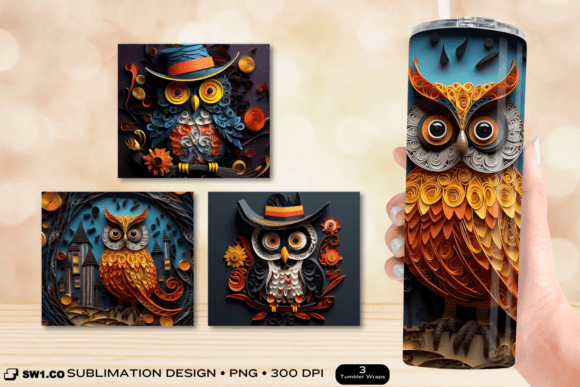
Paper Art Owl Tumbler Wrap Sublimation
When I first opened the digital package for the Paper Art Owl Tumbler Wrap Sublimation, my immediate reaction was a mix of curiosity and professional skepticism. As an embroidery designer who has spent years evaluating thousands of files, I know that what looks stunning on a high-resolution screen doesn’t always translate cleanly to thread. This file is categorized under Crafts and Graphics, but its primary utility lies in how it adapts to physical media. The product description highlights it as a "High quality 20 oz Skinny Tumbler 3D Paper Art Owl Tumbler Wrap Sublimation Design," which suggests a specific application: sublimation printing on tumblers rather than traditional machine embroidery. However, many designers and Etsy sellers look at intricate graphic designs like this and wonder if they can adapt the aesthetic for embroidered projects, or if the visual weight of the design works well for mixed-media handmade products.
In this review, I am looking past the marketing buzzwords to evaluate the actual design assets. We are dealing with a ZIP file containing instant digital downloads. For the creative entrepreneur, the question isn't just about the image itself, but how it functions as a design asset. Does the paper art style—the layered, cut-out look of the owl—hold up when simplified? Can it serve as inspiration for a complex machine embroidery design? Or is it strictly a print-on-demand graphic? Let’s break down the practical implications for your craft business.
Visual Impact and Design Personality
The core appeal of the Paper Art Owl Tumbler Wrap Sublimation is its texture. Even though it is a flat digital file, the artwork mimics the depth of layered cardstock. In the world of handmade products, this creates an immediate sense of sophistication. It feels tactile before the customer even touches the item. For a boutique owner or a maker selling at craft fairs, this kind of visual personality is gold. It stands out against the typical floral or geometric patterns that saturate the market.
However, we must be realistic about translation. If you are considering using this graphic as a reference for an applique design or a multi-color satin stitch project, you need to consider the complexity. The "paper art" effect relies on sharp edges and distinct color blocking. When converted into thread, those clean lines can sometimes soften or bleed if the stitch density is not managed correctly. The design naturally lends itself to bold, solid shapes, which makes it a strong candidate for fill stitches, provided the hoop size allows for enough resolution to capture the nuances of the owl’s feathers and facial features.
Real-World Application Scenarios
I often advise small business owners to think about where their product will live. Where does this design fit best? My first scenario involves a custom gift set. Imagine pairing a tumbler featuring this wrap with a matching embroidered tote bag. You could use the owl motif as a central focal point on the bag, perhaps simplifying the layers into a single-color running stitch outline or a dense fill stitch monochrome version. This creates brand consistency across different custom apparel items.
Another strong use case is nursery decor. Owls are a timeless theme for baby rooms. If you are creating embroidered patches for baby clothes or hats, the circular or compact nature of many owl designs works well within standard hoop sizes. The whimsical yet structured look of the paper art style appeals to parents looking for something modern and artistic, rather than cartoonish. For holiday embroidery, specifically autumn or Halloween themes, this design offers a neutral color palette that fits seamlessly into fall decor without being overly spooky.
For the Etsy seller focusing on digital products, this file serves as excellent source material. You can create printable mockups showing how the design looks on various backgrounds. This helps buyers visualize the final product, increasing trust and engagement. It also works well as a preview image for listings, drawing attention with its unique 3D-like appearance.
Technical Considerations and Limitations
While the design is visually striking, there are areas where caution is required. First, let’s address the format. The product is described as a sublimation wrap for a 20 oz skinny tumbler. This means the aspect ratio is long and narrow. If you attempt to digitize this for a small hoop, such as one used for a cap brim or a delicate tea towel, you may run into issues with scale. The details might become too small to stitch clearly, resulting in a muddy appearance. Always check the hoop size compatibility before committing to a production run.
Fabric texture plays a huge role here. On a smooth cotton canvas, the design will pop. But on a textured fabric like denim or a thick fleece sweatshirt, the fine lines of the paper art effect may get lost. I recommend testing this on scrap fabric first. Use the same stabilizer you plan to use for the final product. A heavy-duty cut-away stabilizer is usually necessary for wrapped designs to prevent puckering, especially if you are adding heavy thread colors or dense fills.
Dark fabrics present another challenge. The paper art style often relies on light-to-dark contrast to show depth. If you are embroidering this on a black hoodie, you will need to ensure your thread selection provides enough brightness. Using white or metallic threads for the highlights can help mimic the original graphic’s vibrancy. Conversely, on light fabrics, you might need a backing layer or careful stitching to prevent the design from looking transparent or weak.
Practical Designer Notes for Production
If you decide to incorporate elements of the Paper Art Owl Tumbler Wrap Sublimation into your workflow, follow these steps to ensure a professional finish:
- Test on Scrap: Never go straight to the final product. Stitch the design on a piece of similar fabric to check for tension issues and thread breaks.
- Review Stitch Density: Ensure the digitized version (if you are converting it) isn’t too dense. Too much thread can cause the fabric to pucker, ruining the sleek look of the tumbler or garment.
- Check Small Details: Zoom in on the digital file. Are there tiny gaps or lines that might disappear during stitching? Simplify if necessary.
- Black and White Mockup: View the design in grayscale. This helps you assess the value contrast. If it looks flat in black and white, it will likely look flat in color too.
- Licensing Confirmation: Before selling finished items, confirm the licensing terms. Most digital graphics allow for personal use and limited commercial use, but reselling the file itself is almost always prohibited. Make sure you are compliant to protect your craft business.
Final Verdict
The Paper Art Owl Tumbler Wrap Sublimation is a versatile and aesthetically pleasing asset. While it is technically a sublimation file, its strong graphic presence makes it a valuable resource for designers looking to expand their offerings. It works beautifully for personalized gifts, small shop products, and commercial embroidery projects where the design can be adapted or referenced. By paying attention to technical details like hoop size, fabric choice, and stitch density, you can transform this digital graphic into a tangible, high-value handmade product that customers will love.
Whether you are an experienced embroiderer or a hobbyist just starting out, this design adds a touch of modern artistry to your portfolio. Just remember: good design starts with smart preparation. Test, refine, and then create. Your customers will notice the difference.