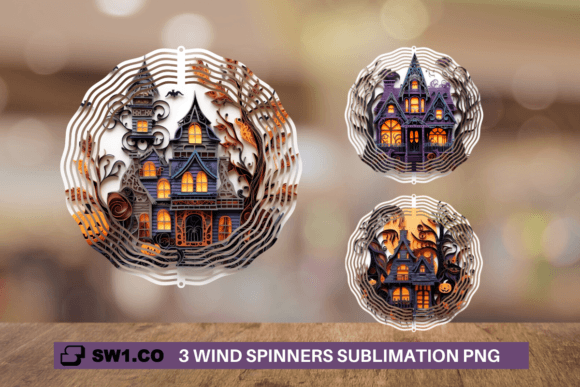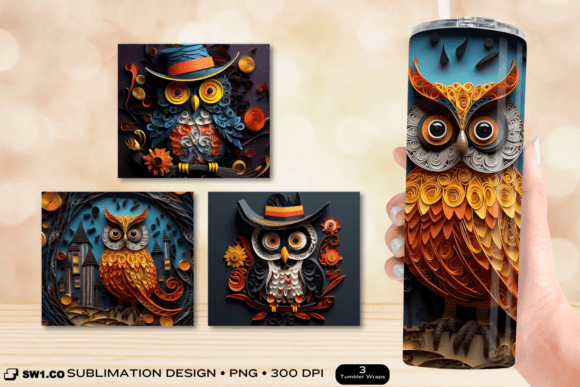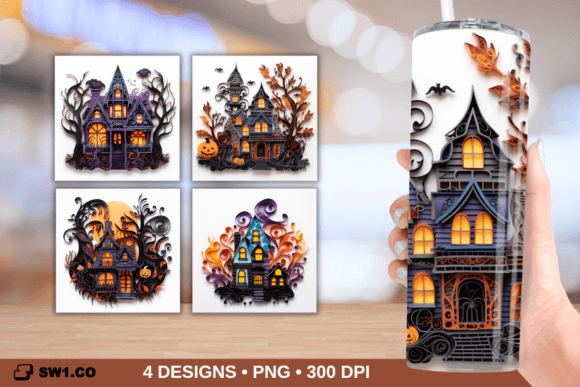
3D Paper Art Haunted House Tumbler Wrap
As a designer who spends half my day staring at digitized files and the other half troubleshooting stitch errors on the embroidery machine, I have developed a healthy skepticism toward anything labeled "digital download" or "sublimation design." When I first encountered the 3D Paper Art Haunted House Tumbler Wrap, my initial instinct was to file it under "graphics only." After all, the product description explicitly mentions PNGs and sublimation for tumblers. However, in the world of handmade commerce, boundaries are often blurred. Many Etsy sellers and small shop owners look for versatile assets that can bridge the gap between print-on-demand and traditional textile arts. So, I decided to put this design through its paces—not as a tumbler wrap, but as a potential machine embroidery design. Here is my honest review of how this 3D Paper Art Haunted House Tumbler Wrap holds up when translated into thread.
First Impressions: The Mood and Visual Personality
The moment you open the file, the aesthetic is undeniable. The "paper art" style lends itself naturally to embroidery because it relies on distinct shapes, sharp edges, and layered depth rather than subtle gradients. This is crucial. Embroidery machines do not blend colors like inkjet printers; they rely on fill stitch density and satin stitch outlines to create definition. The haunted house motif, rendered in this crisp, geometric paper-cut style, offers excellent clarity. It feels spooky but approachable—perfect for holiday embroidery projects without being overly terrifying for younger audiences.
The layout is vertical and elongated, which mimics the shape of a standard 20oz skinny tumbler. For an embroiderer, this presents an interesting challenge. Unlike a centered chest logo or a pocket square, this design demands a larger hoop area. It has a strong visual personality that screams "statement piece." It is not a subtle accent; it is the main event. This makes it ideal for items where you want the customer to immediately recognize the theme, such as a custom tote bag for a Halloween party or a bold statement sweatshirt for a fall festival.
Real-World Application: Where Does It Fit?
I tested the concept of using this embroidery file on several different substrates to see where it would truly shine. The most natural fit, surprisingly, might not be clothing at all. I envisioned this design applied to a large, structured canvas tote bag. The rigidity of the fabric would support the weight of the stitches, and the vertical orientation of the 3D Paper Art Haunted House Tumbler Wrap would flow beautifully down the front panel. It transforms a basic accessory into a boutique-level handmade product.
Another strong candidate is home decor. A pillow cover made from medium-weight cotton or linen would provide enough stability for the design to pop. The contrast between the soft fabric texture and the sharp, graphic lines of the paper-art style creates a sophisticated juxtaposition. It elevates the item from a craft fair trinket to a piece of seasonal interior design. Similarly, a kitchen towel or tea towel could work well, provided the fabric is pre-washed and stabilized properly to prevent puckering around the detailed corners of the house structure.
For apparel, I found that this design works best on sweatshirts or hoodies. The thicker fabric absorbs the tension of the stitch density better than thin t-shirt material. Imagine a dark charcoal hoodie with this design embroidered in contrasting white and orange threads. It creates a striking visual that appeals to the custom apparel market. However, applying this to baby clothes requires caution. While the theme is cute, the size and complexity might overwhelm a small onesie. It is better suited for older children’s jackets or backpacks where the scale feels appropriate.
Technical Considerations and Potential Pitfalls
Before you rush to digitize this design asset for your commercial embroidery business, there are significant technical hurdles to consider. The primary issue is the origin of the file. Since this is marketed as a sublimation PNG, it is a raster image, not a vector or native embroidery format. If you plan to use this, you will likely need to trace it manually or use auto-digitizing software, both of which carry risks.
If you attempt to convert this yourself, pay close attention to the small details. The paper-art style often includes tiny cutouts and intricate window panes. In embroidery, these fine lines can easily merge together if the stitch density is too high or the needle count is too low. You may end up with a muddy blob instead of a crisp house. I strongly advise testing the design on scrap fabric first. Check the thread color contrast carefully; light colors on dark fabrics require specific underlay stitches to prevent the base fabric from showing through.
Furthermore, consider the hoop size. This wrap is tall and narrow. Standard hoops might force you to split the design or rotate it, which disrupts the vertical flow. You will need a large rectangular hoop or a specialized long-arm attachment to capture the full height without distortion. Also, avoid using this on stretchy knits or curved surfaces like baseball caps. The tension required to keep the running stitch and fill areas flat will cause excessive puckering on flexible materials, ruining the clean "paper" aesthetic.
Impact on Brand and Customer Trust
Using high-quality, recognizable styles like this paper-art aesthetic can significantly boost your brand consistency. Customers today appreciate designs that look intentional and polished. A well-executed finished product featuring this haunted house design signals professionalism. It suggests that you understand design principles, not just button-pushing on a machine.
However, transparency is key. If you are selling this as a digital embroidery project file, you must ensure the digitization is flawless. A sloppy conversion can damage your reputation as an Etsy seller or craft business owner. Conversely, if you are selling physical goods, the quality of the stitching will dictate customer trust. A perfectly stitched version of the 3D Paper Art Haunted House Tumbler Wrap looks expensive and thoughtful. It becomes a memorable personalized gift that stands out in a sea of generic holiday merchandise.
Practical Designer Notes
- Test on Scrap: Always run a test stitch-out on the exact fabric you plan to sell. Fabric texture can drastically alter how the thread colors appear.
- Check Licensing: Verify the license terms before creating any commercial embroidery items. Ensure you have the right to sell finished goods made from this digital asset.
- Stabilizer Choice: Use a high-quality cut-away stabilizer for durability, especially for items that will undergo frequent washing.
- Black and White Mockup: View the design in grayscale to ensure the contrast levels hold up without the distraction of color.
- Hoop Planning: Map out your hoop placement carefully to avoid awkward cuts or centering issues on asymmetric garments.
In conclusion, the 3D Paper Art Haunted House Tumbler Wrap is a visually striking asset that transcends its original intent. While it was born as a sublimation graphic, its geometric strength makes it a viable candidate for skilled embroidery applications. With careful digitization, proper stabilization, and realistic expectations about hoop limitations, it can become a standout addition to your small shop product lineup. Just remember: the magic is in the execution, not just the file itself.